
Alabama Residents: Click here to hear our radio advertisement
RURAL Study billboards were put up in both Selma and Wilcox County in late 2020. Dr. Shauntice Allen, the PI of the Alabama State Core, recorded radio advertisements at a local radio station in Valley Grand to promote the Study. The radio advertisements have aired in Dallas County since November 2020! Click below to hear it.

Scott Comm Local Focus Special Feature with The RURAL Heart and Lung Study/Dr. Allen
UAB’s Dr. Shauntice Allen joins The New 100.9 ALEX-FM WALX for their Local Focus Special Feature, where she discusses the RURAL Heart and Lung Study coming to Dallas County. Be on the look out to participate via an invitation in the mail sent out to ra …
Rural Health Study Prepares to Recruit Oktibbeha Residents
For most of the 20th Century, experts hailed the health benefits of country living. Fresh air, less-crowded living conditions and homegrown food sources were lauded as a preferable alternative to urban living.
RURAL Study Begins Outreach and Community Engagement in Mississippi
Bascom K. Reprinted with permission of the Journal of the Mississippi State Medical Association, 2019;61(5):148-149. RURAL study begins outreach and community engagement in North Mississippi
RURAL Study Brings Outreach, Community Engagement in North Mississippi
Page 6 in the March issue of Mississippi RURAL Health Association’s Crossroads discusses UMMC’s local engagements that researchers engaged in so far.
TEDx: Rapid decline in rural health – What’s in a zip code?
At this TEDxBeaconStreetSalon event, Dr. Vasan Ramachandran, PI of The RURAL Study, discusses health inequities in rural areas
Dr. George O’Connor Named to Boston Magazine Top Docs
Dr. O’Connor, PI of RURAL’s Pulmonary Core, has been named one of the top doctors in his field in the Boston area.
Dr. Gene Brody Headlines Inaugural NIH Rural Health Seminar
Dr. Brody, of RURAL’s Social Determinants of Health Core, led the seminar that brought together researchers, medical practitioners, and others to explore topics in rural health and to share research ideas for how innovations in clinical and translation …
The RURAL Study Celebrates National Rural Health Day & the #PowerOfRural

On Thursday, Nov. 21, the The National Organization of State Offices of Rural Health (NOSORH) celebrated National Rural Health Day (NRHD). This day recognizes the spirit of rural communities, while raising awareness around the unique health-related challenges that rural Americans face. Given the statistics around the rural health disparities, The RURAL Study stands with NOSORH in promoting National Rural Health Day, as we hope to address critical gaps in our knowledge of heart and lung disorders in rural counties in the southeastern US.
Living in rural America should not come with a health penalty. NOSORH’s tagline of “It’s not just a day, it’s a movement” truly encompasses what The RURAL Study advocates for, which is dedicating strong research efforts in hopes of gaining health information on this often overlooked population. We recognize it will not happen in one day, but we hope to contribute to a movement focusing on more rural health-related research and inspire other researchers to travel to America’s heartland. The “can do” attitude of rural Americans matches that of the researchers of The RURAL Study, as we embark upon this groundbreaking work.
What is the RURAL Study?
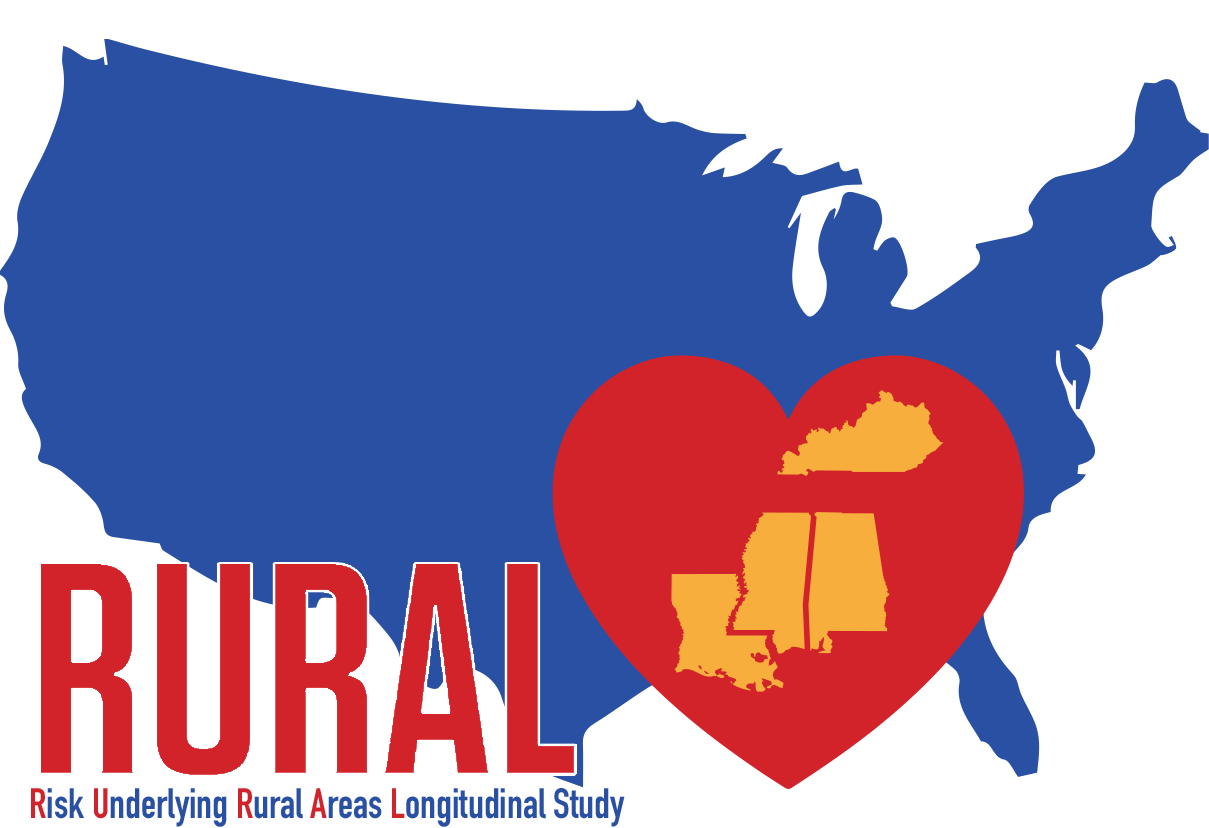
The RURAL Cohort Study seeks to better understand the health concerns rural Americans by focusing on heart and lung health and assessing the frequency of risk factors for heart and lung disease in these communities. The Risk Underlying Rural Areas Longitudinal (RURAL) Cohort Study is a new six-year research endeavor seeking to identify why some people in the rural south may live shorter and less healthy lives. Focusing on 10 rural counties in Alabama, Kentucky, Louisiana and Mississippi, the research team will examine about 4,000 residents to study different aspects of their heart, lung and general health.
How will this study help rural America?
We will work with communities to help shape this research project, through Community Advisory Boards, Participant Advisory Boards and other local partnerships. This community connection will build a bridge to understand why rural Americans are suffering higher rates of heart, lung and blood diseases than their urban counterparts. Deidentified, community-wide data will be provided to the local communities and health agencies in hopes of addressing these needs. Our research data will provide insights to assist the rural medical communities in the care of their patients.
What can I do to help raise awareness around National Rural Health Day?
One simple thing you can do to celebrate National Rural Health Day is taking the Pledge to Partner. This NRHD pledge takes a four-component approach to bring collective focus to specific healthcare issues facing rural communities. By taking this pledge, you commit to:
- COLLABORATE with stakeholders and competitors to build relationships and create partnerships to provide more resources into rural communities and healthcare
- COMMUNICATE with communities and partners about the Power of Rural and share the stories of those making a difference
- EDUCATE communities, stakeholders, and workforce about the issues that rural America is facing and how we can best approach them.
- INNOVATE groundbreaking ideas and programs to help build healthy communities and reach at-risk rural populations and improving health care delivery in rural areas.
Watch the Featured Film & Join the Discussion
Join in on NOSORH’s screening of The Providers, which tells the story of three doctors and their patients facing a shortage of physicians while battling the opioid epidemic.
#PowerOfRural
With the hashtag #PowerOfRural, you can easily spread the word regarding National Rural Health Day through various means.
Interested in seeing more statistics regarding rural health disparities? Click here.
Have any questions or comments about The RURAL Study? Contact us.
Why do people in the rural South die sooner? UAB study to examine question
Why people in rural communities in the South live shorter and less healthy lives than those who reside elsewhere in the United States is the focus of a new national study that will be based at the University of Alabama at Birmingham.